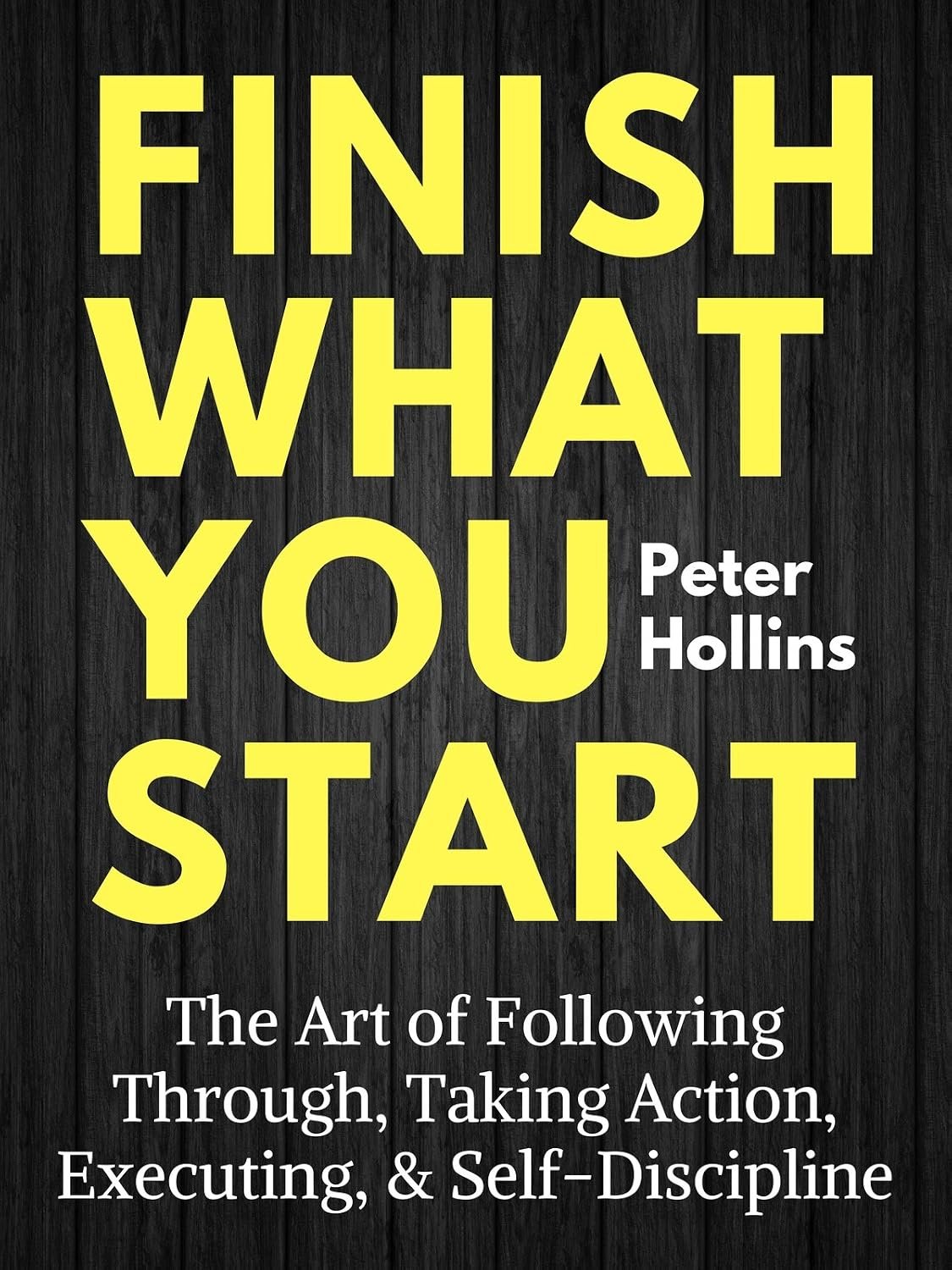
Finish What You Start: The Art of Following Through, Taking Action, Executing, & Self-Discipline by Peter Hollins
is a practical blueprint designed to help individuals bridge the gap between setting goals and actually completing them.
Rather than relying on fleeting motivation, Hollins treats follow-through as a trainable skill built on psychology, systems, and self-awareness
Book Overview
-
Core Premise: Following through is 100% a mental battle. Success requires managing psychological roadblocks—like perfectionism, fear, and procrastination—and building structured systems that make execution automatic.
-
The Four Pillars of Follow-Through:
-
Self-Discipline: The ability to do what you should, even when you don’t feel like it.
-
Persistence: The mental resilience to push through friction and setbacks.
-
Focus: Concentrating effort on one priority without succumbing to distractions.
-
Action: Shifting from planning and overthinking into physical execution.
Key Takeaways & Core Concepts
1. Identify Your Psychological Roadblocks
Before fixing productivity, you must understand why you stop:
-
Perfectionism: Driven by insecurity and fear of criticism; it keeps you stuck tweaking instead of finishing.
-
Planning Fallacy: Spending endless hours planning and researching to create a false sense of accomplishment without taking real action.
-
Inhibiting Tactics: Giving in to small temptations, bad goal setting, or poor time management.
2. The Follow-Through Mindset
To finish tasks consistently, Hollins highlights four critical mindsets:
-
It’s All Worthwhile: Internalize that hard work delivers an eventual payoff, giving meaning to tedious tasks.
-
Comfort with Discomfort: Any worthy goal will involve fatigue, boredom, or frustration; embrace those feelings as part of the process.
-
Without Following Through, There Is No Learning: Unfinished projects yield zero feedback; only completed work allows you to evaluate and improve.
-
Manage Stress & Energy: Fatigue and anxiety drain willpower, leading directly to surrender.
3. Build a Personal « Manifesto »
Hollins recommends creating daily execution rules to remove decision fatigue. Examples of these rules include:
-
Rule of 3: Focus on maximum 3 major tasks a day.
-
The 10-10-10 Rule: Look ahead 10 minutes, 10 hours, and 10 days. Ask if quitting right now benefits your future self.
-
10-Minute Rule: If you want to quit, force yourself to work for just 10 more minutes first.
4. Create an Environment for Execution
-
Singletasking & Batching: Multitasking causes « attention residue, » where mental clarity is lost switching contexts. Group similar tasks and focus on one thing at a time.
-
The 40–70 Rule: Don’t act with less than 40% of the information, but don’t wait for more than 70%—perfection is an illusion.
-
The « Don’t-Do » List: Maintain a explicit list of distracting activities, non-priority tasks, and low-value commitments to ignore.
READ THE BOOK ONLINE
Finish What You Start: The Art of Following Through, Taking Action, Executing, & Self-Discipline — Peter Hollins