About the Book
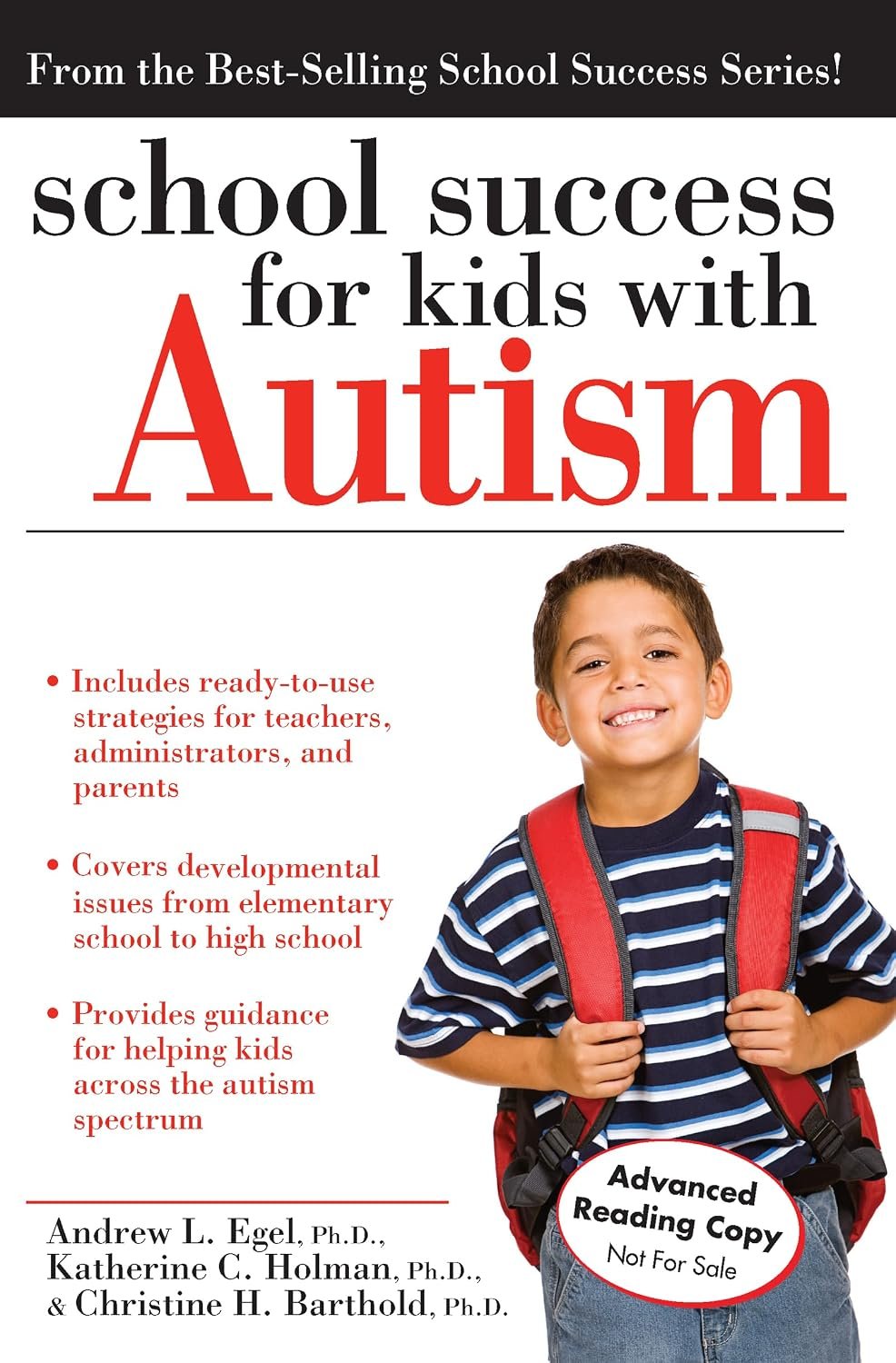
School Success for Kids with Autism is an educational guide edited by Andrew L. Egel, Ph.D., Katherine C. Holman, Ph.D., and Christine H. Barthold, Ph.D. It focuses on helping children and adolescents with autism spectrum disorder (ASD) succeed academically, socially, and behaviorally at school. The book was published by Prufrock Press and brings together research-based strategies for parents, teachers, and other education professionals.
Rather than treating autism as a single set of difficulties, the book emphasizes understanding each student’s individual strengths, needs, communication style, learning profile, and behavior. It explains how families and schools can work together to create supportive and effective educational environments from preschool through high school.
Detailed Summary
The book begins by introducing autism spectrum disorders and explaining how autism can affect communication, social interaction, learning, behavior, and participation in the classroom. This foundation helps educators and parents better understand why a child may respond differently to ordinary school situations.
A major theme is the importance of collaboration between families and schools. Parents and teachers are encouraged to share information, establish realistic goals, communicate regularly, and work together when difficulties arise. The objective is to create a consistent environment in which the child can develop academic and life skills.
The authors then examine instructional strategies and classroom supports. These include adapting teaching methods, providing appropriate structure, supporting communication, breaking complex tasks into manageable steps, and using strategies that take advantage of the student’s strengths. Particular attention is given to creating inclusive classrooms in which students with autism can participate meaningfully alongside their peers.
Another important subject is transitions. Moving between teachers, classrooms, schools, or educational levels can be particularly challenging for some students with autism. The book discusses ways to prepare children for these changes and reduce uncertainty through planning, communication, and appropriate support.
The book also addresses academic and practical challenges outside the classroom, including homework, curriculum selection, and the development of skills at home. Parents are shown how home-based interventions can complement school programs and reinforce useful behaviors and abilities.
Different educational stages receive attention as well. Strategies appropriate for early childhood, elementary school, and secondary education may differ, so the book considers how interventions and educational programs can evolve as students grow.
Main Takeaways
-
Understanding the individual child is essential to effective education.
-
Parents and teachers should work as a coordinated team.
-
Classroom instruction may need to be adapted to the student’s learning profile.
-
Predictable routines and carefully planned transitions can reduce difficulties.
-
Academic, communication, social, and behavioral goals should be addressed together.
-
Homework and home-based activities can reinforce school learning.
-
Inclusive education works best when appropriate supports are provided.
-
Evidence-based educational strategies can help students with autism become more independent and successful.
Overall, School Success for Kids with Autism is a practical reference for parents and educators who want to understand autism in the context of education and develop effective strategies for helping students succeed. Its central message is that successful schooling depends not only on the child’s abilities, but also on creating the right supports, teaching strategies, partnerships, and learning environment.
READ THE BOOK ONLINE
School Success for Kids with Autism de Ph.D. Egel, Andrew L.